Ghassan's Fresh Mediterranean Eats
Case Study
From owner-dependent routines to shared systems, clearer accountability, and better financial visibility
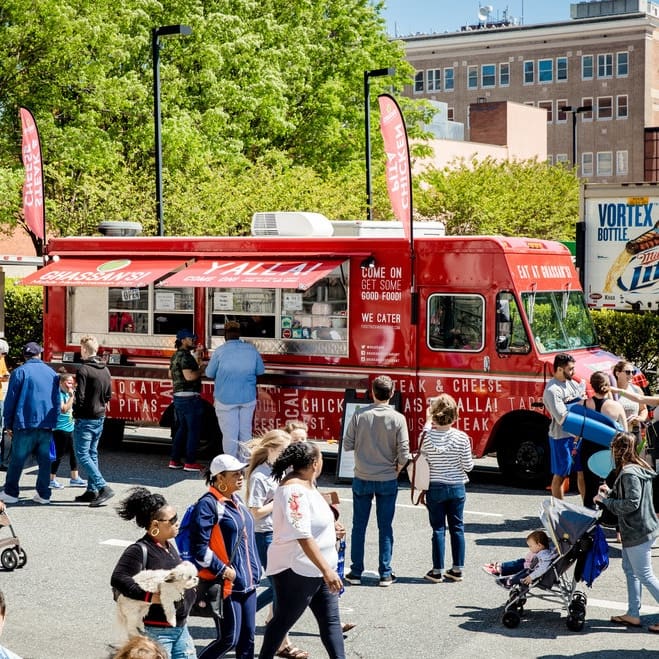
Greensboro, NC - Ghassan’s had spent more than four decades building a respected family restaurant business. By 2017, the company included five locations, a food truck, and a growing catering operation. The business had staying power, but the systems supporting it had not evolved at the same pace.
New competitors were entering the market. Several locations showed their age. Old and new branding appeared side by side. Key operating knowledge was still held primarily by family members, managers, and long-tenured employees rather than in documented systems.
Ownership remained deeply involved in ordering, scheduling, troubleshooting, and daily quality control. Ghassan’s did not need rescuing. It needed an operating structure that would protect what the family had built while preparing the next generation to lead it.
Blue Orbit began with a company-wide restaurant operations assessment. After reviewing the findings, Ziad and Lina Fleihan engaged the team for a multi-month implementation focused on leadership, culture, menu engineering, training, operating systems, and financial controls.
Ghassan’s had solid food, committed ownership, experienced employees, and strong community recognition. The challenge was that each location relied heavily on the people working there to remember how things should be done.
Processes differed between restaurants. Training was informal. Manager responsibilities were not clearly divided. Recipes, production methods, guest flow, uniforms, cleaning standards, and quality controls varied by location.
Financial reporting also made it difficult to evaluate each part of the company independently. The restaurants, food truck, catering business, and commissary activity were largely viewed together rather than as separate profit centers.
The work ahead centered on six priorities:
- Define ownership and management responsibilities
- Standardize recipes, production, and menu execution
- Build hiring, onboarding, training, and evaluation systems
- Create consistent daily operating routines
- Improve financial reporting and cost controls
- Establish a clearer direction for the Ghassan’s brand
The goal was not to bury the company in paperwork. It was to take decades of operating knowledge and turn it into tools that managers could follow, ownership could inspect, and future leaders could teach.
Ghassan’s already had a story worth telling: a family-owned Greensboro restaurant company with deep roots, loyal employees, fresh Mediterranean food, and a long history in the community.
That identity had never been fully documented. Without a shared definition of the brand, decisions about menus, facilities, marketing, service, and growth were often made independently.
Blue Orbit worked with Ziad and Lina to develop a Brand Filter and guiding principles for the company. These documents gave the family and management team a common reference point for evaluating future decisions.
This work was especially important as leadership shifted from the founding generation to the next. The intention was not to replace the family’s values, but to record them clearly enough that others could understand and carry them forward.
Ghassan’s restaurants had traditionally been managed through close owner involvement and managers who also carried significant cooking and production responsibilities. That approach had helped the company grow, but it left ownership responsible for too many daily decisions.
The leadership work established a clearer organizational structure and chain of command. Responsibilities were assigned to specific positions rather than being shared informally or handled by whichever family member was available.
The completed work included:
- Company organizational chart
- Areas of Responsibility for leadership positions
- Owner and manager job descriptions
- Salary ranges for management roles
- Succession and employee-development strategy
- Manager and employee evaluation process
- Employee handbook
- Defined ownership routines and inspection responsibilities
These tools gave managers clearer expectations and gave ownership a more consistent way to coach performance without stepping into every daily task.
The Ghassan’s menu had evolved over many years as Mediterranean items, sandwiches, salads, platters, and catering products were added. Some items remained because they had always been offered, while others had never been evaluated against current demand, production requirements, or profitability.
Blue Orbit reviewed item sales, recipe costs, production procedures, ingredient quality, packaging, and operational complexity. A Dog-Star analysis identified the popularity and contribution margin of individual menu items.
The menu engineering work included:
- Testing and refining recipes
- Documenting new and updated recipes
- Costing new recipes
- Evaluating the full menu by popularity and profitability
- Reviewing ingredient quality and product specifications
- Testing production methods for speed and consistency
- Evaluating plateware, flatware, and takeout packaging
- Developing order guides, prep sheets, and line checks
- Preparing the menu for a structured rollout across locations
The work was not limited to removing expensive or slow-selling products. It also addressed food quality, hot-holding practices, portion control, packaging, station setup, and the ability to produce the same item consistently in every restaurant.
Many of the company’s systems existed in the experience of individual employees. That worked when the same people were present every day. It created risk when a manager left, a new employee was hired, or an owner was unavailable.
Blue Orbit worked with the Ghassan’s team to document the routines that kept each restaurant ready, clean, stocked, and operating consistently.
The operating-system work included:
- Hourly job descriptions and position routines
- Hiring and onboarding procedures
- Training schedules for restaurant positions
- Employee training manual
- Daily and weekly cleaning schedules
- Manager opening and closing routines
- Production and preparation tools
- Quality and readiness line checks
- General manager training for the menu rollout
- A location-by-location implementation schedule
The objective was a common operating method across the company. Employees would know what good performance looked like, managers would have a way to inspect it, and ownership would have a consistent basis for accountability.
Ghassan’s accounting reports did not clearly separate the performance of each restaurant, the food truck, catering, and commissary operations. That made it difficult to compare locations, spot cost problems, or hold individual managers responsible for controllable expenses.
Blue Orbit helped establish a more detailed financial and reporting structure built around the way the company operated.
The financial-control work included:
- Revised chart of accounts
- Individual restaurant profit-and-loss reporting structure
- Weekly operating statement format
- Labor budgets based on projected sales
- Sales forecasting and schedule-writing procedures
- Daily sales and labor tracking
- Monthly operating statement and invoice-processing procedures
- Monthly inventory system
- Commissary ordering and accountability procedures
- Budget-development process
- Annual sales-building planning tools
This gave the family a clearer view of where the company was making money, where costs were drifting, and which issues required attention. It also created a stronger basis for comparing locations and planning future investments.
mpany was making money, where costs were drifting, and which issues required attention. It also created a stronger basis for comparing locations and planning future investments.
Protecting the Legacy While Preparing for Growth
The completed engagement did not attempt to turn Ghassan’s into a different company. It translated the family’s operating knowledge, values, recipes, and expectations into a more teachable and measurable structure.
Ziad and Lina remained closely involved throughout the work. Their knowledge of the restaurants, employees, guests, and community shaped the systems that were developed. Blue Orbit provided the framework and restaurant operations consulting support; the Ghassan’s family supplied the history, judgment, and commitment required to make the work fit the business.
The engagement left Ghassan’s with:
- A documented brand and cultural direction
- A defined ownership and management structure
- Clearer roles and performance expectations
- An engineered and standardized menu
- Written hiring, training, and operating systems
- Better unit-level financial visibility
- Labor, inventory, and cost-control tools
- A structured budgeting and sales-planning process
Together, these systems provided a clearer path for coaching managers, evaluating individual locations, protecting consistency, and making decisions about future growth without relying entirely on daily owner intervention.
FAQ
Ghassan’s had a successful, long-established restaurant business, but too much operating knowledge remained undocumented. The engagement addressed inconsistent procedures between locations, unclear management responsibilities, informal training, menu complexity, owner dependence, and limited financial visibility by profit center.
The assessment reviewed restaurant operations, food quality, menu performance, facilities, management structure, company culture, financial reporting, labor practices, purchasing, training, branding, catering, and sales-building opportunities. The findings were then organized into a sequenced improvement plan.
Phase 2 included brand and culture development, organizational structure, job responsibilities, employee policies, menu engineering, recipe and production systems, hiring and training procedures, cleaning schedules, financial reporting, labor controls, inventory procedures, commissary controls, budgeting, and sales planning.
Blue Orbit worked with the Ghassan’s team to evaluate and refine the existing menu rather than replace the concept. The work included recipe testing, costing, profitability analysis, ingredient and packaging review, production improvements, operating tools, and support for rolling updated menu procedures into the restaurants.
The work converted owner knowledge and location-specific routines into shared company systems. This gave the family clearer management accountability, more consistent operating expectations, improved unit-level reporting, and a stronger structure for succession, manager development, and future growth.