
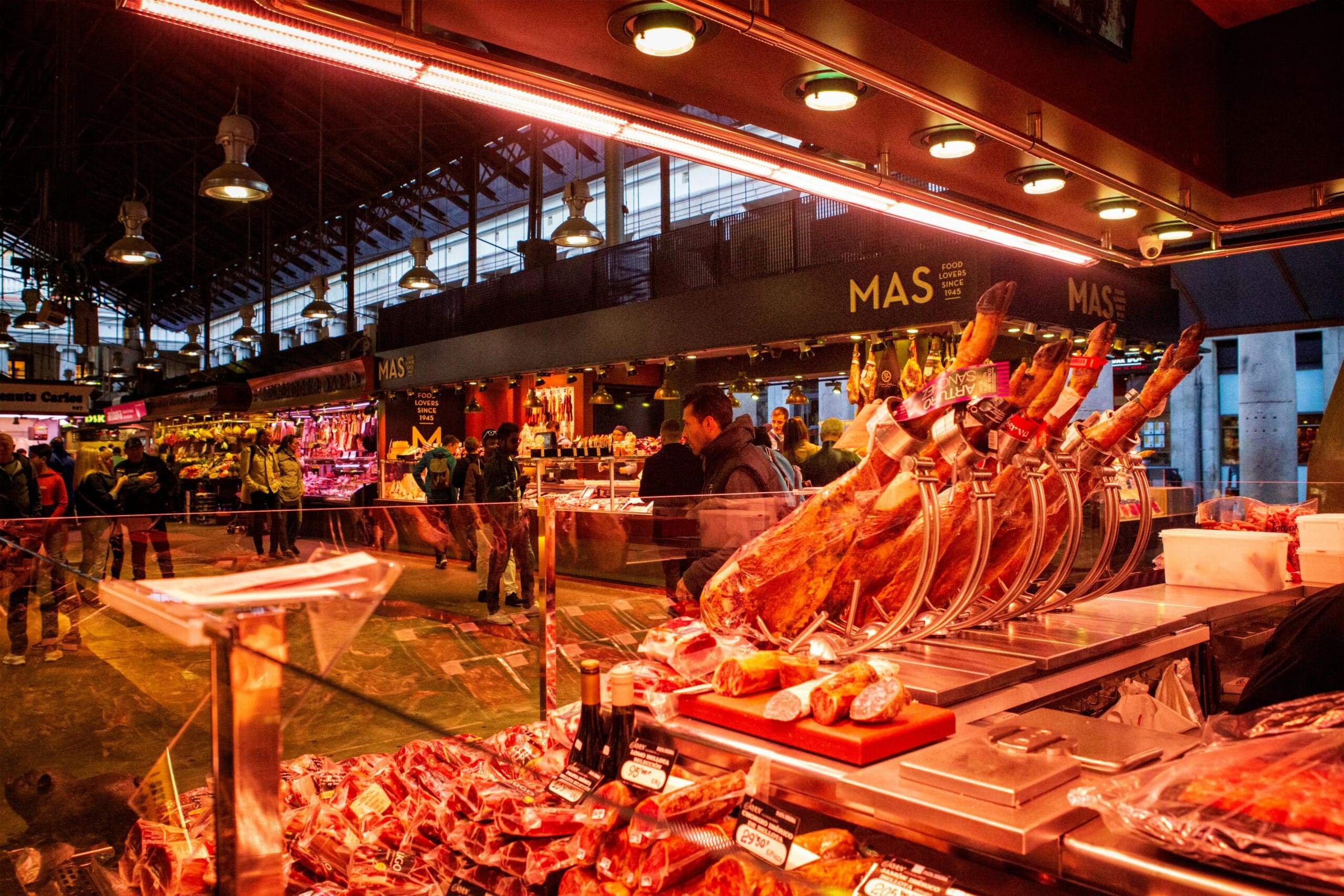
What Food Halls Got Right That Malls Never Figured Out
By Ray Camillo /
Food hall design strategy solved a problem that American malls spent four decades making worse. The irony is that malls had every structural advantage: the real estate, the foot traffic infrastructure, the anchor relationships, the capital. They just kept making the wrong decision about food.
For most of mall history, the food court was the consolation prize. It was where you went when your feet hurt and your kids were losing it. The layout told you everything about how it was valued: basement level or top floor, fluorescent lighting, national chains with laminated menus, trays you slid along a rail. It was designed for transaction speed, not experience. Get them fed, get them back to shopping.
Food halls figured out that food is the destination, not the “dwell time enhancer” or refueling stop.
The Design Logic Is Different
Walk into a well-executed food hall and you notice something immediately. 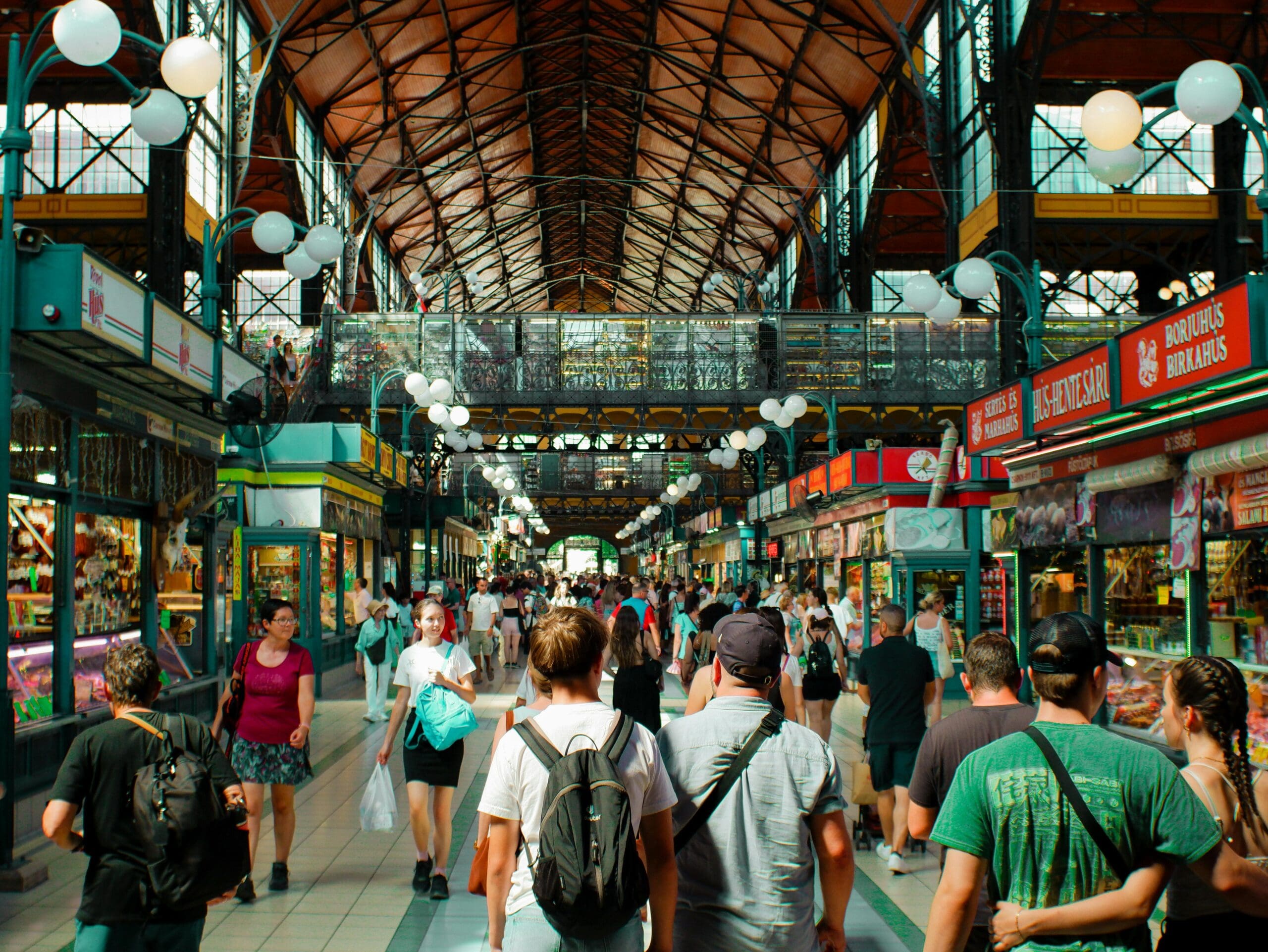 The sightlines are open but the spaces feel distinct. Each vendor has its own identity, its own visual language, its own staff. There’s noise and movement, but it’s organized noise. You’re not staring at a directory trying to figure out where the Sbarro ends and the Orange Julius begins.
That vendor identity piece is not accidental. The better food hall developers understood early that what draws people in is the feeling of discovery, of choosing between things that each feel specific and curated. A good food hall feels like six interesting restaurants sharing a building. A food court feels like one large beige room with six different logos on the wall.
The seating is communal by design. You sit where there’s room, next to people you didn’t come with, at a table that belongs to the hall rather than any one vendor. That model terrified traditional restaurateurs for years. It still makes some operators uncomfortable. But it creates an energy that a dining room full of two-tops simply cannot replicate.
What the Tenant Mix Actually Does
Mall food courts are optimized for brands with national name recognition and franchise infrastructure. That made sense from a leasing risk standpoint. A Subway signs a lease and shows up. A first-time taco concept might not.
Food halls, especially the ones that have worked, went the other direction. They curated. They looked for operators with a point of view, a cooking identity, something you couldn’t get at the location down the street. The mix became the product. You weren’t just going for the ramen. You were going to the place that had the ramen and the natural wine bar and the Venezuelan arepas and the soft-serve operation that sources everything locally.
That curation created a collective draw that no single tenant could generate alone. It also created a reason to come back regularly, because the mix could evolve as vendors rotated in and out. Malls couldn’t rotate anchor tenants. Food halls built rotation into the model.
The Part That’s Easy to Miss
The operational insight underneath all of this is about shared infrastructure. A food hall vendor gets a commercial kitchen footprint, hood systems, utilities, and a built-in audience in exchange for a smaller net revenue per cover than they’d keep in a standalone location. For the right operator, especially one testing a concept or entering a new market, that tradeoff makes sense.
It’s not the right vehicle for every concept. High-ticket tasting menu experiences don’t translate. Concepts that depend on a full dining room experience lose something in the format. But for a chef-driven fast casual with a strong identity and discipline around a tight menu, a food hall can be a legitimate platform, not just a proving ground.
Malls gave people a place to eat. Food halls gave people a reason to come.
If you’re evaluating a food hall opportunity as a tenant or a developer, the conversation around fit and format is worth having before you commit to a space. Book an introductory call or schedule an advisory session.