
The Overlooked Areas Where Restaurants Lose Efficiency
By Bighouse Graphix /
In the fast-paced world of restaurants, efficiency isn’t just about what happens in the kitchen. It’s about managing the entire guest experience from the moment they walk in the door until they leave. There are several areas that often get overlooked when considering a restaurant’s operational efficiency, and yet they can be some of the most critical to managing throughput and maximizing profitability. Timeliness is key in every area of the business cycle, and making the most of your restaurant’s peak windows is essential to success.
At Blue Orbit, we’ve helped countless restaurants optimize not just their kitchen operations, but also their front-of-house and overall guest experience. Here are the overlooked areas where restaurants often lose efficiency and how you can turn them around to boost your bottom line.
__________________________________________________________________________________
1. Managing the Front Door: The Key to Throughput.
One of the most critical areas to manage is the front door. The host or hostess is the first point of contact, responsible for managing reservations, getting customers seated, and ultimately getting them to spend money. Customers don’t spend money when they’re waiting in the lobby, and like empty rooms in a hotel, empty tables don’t make money. Poorly managed reservations or seating can kill a restaurant’s throughput.
Managing reservations effectively means more than just filling the dining room. It’s about optimizing your seating during peak times. For example, savvy restaurateurs will limit peak-time seating to open up earlier or later slots. If a restaurant fills up all at once at 6:30 pm, the kitchen becomes overloaded, and the next seating can’t happen until after 8:00 pm, when it’s too late for another full turn. By restricting peak slots, diners can be coaxed into coming earlier, say at 5:30 or 6:00 pm, which accomplishes two things: it stabilizes the pace of business, allowing the kitchen to cook more calmly, and it opens up the possibility for a second turn, making full use of your peak time.
For restaurants that don’t take reservations or run a hybrid model, it’s crucial that front-desk staff are in tune with the dining progress at each table, periodically taking inventory of meal stages. This helps predict when a table will open and allows the front desk to quote wait times accurately. Quoting too high can scare customers off, while quoting too short will frustrate them when the wait stretches longer than promised. Getting this balance right is critical to managing customer expectations and maintaining throughput.
__________________________________________________________________________________
2. Clearing, Cleaning, and Resetting Tables Efficiently
Another bottleneck in restaurants is the time between when a customer pays and leaves, and when the next one can be seated. If there are no bussers, or if the bussers are also responsible for seating or other tasks, this creates delays in clearing and resetting tables. Efficient table turnover requires dedicated bussers who can clean and reset tables quickly without interfering with other front-of-house duties
Even when there are bussers, having enough is key. If the hostess is also acting as a busser, they won’t be able to focus on seating customers or communicating with them effectively. A circulation system where servers and bussers know their roles and responsibilities can streamline this process, enabling faster table resets and smoother transitions between customers.
______________________________________________________________________________
3. Expediting: A Timely and Organized Food Run
Once food is ready, getting it to the table quickly is essential to maintaining both quality and customer satisfaction. Atimely and organized expediting structure ensures that food is prepared properly and served quickly, preventing delays and remakes that waste time and resources. The role of an expeditor is to keep food moving and ensure that everything is prepared according to the order specifications.
Food that sits in the window too long “dies,” which is why it’s critical that food is picked up as soon as it’s ready. Having an expeditor focused on this task can make all the difference in ensuring that food arrives at the table hot, fresh, and on time.
__________________________________________________________________________________
4. The First Round of Drinks: Timing Matters
The first round of drinks is crucial in setting the tone for a customer’s dining experience and their willingness to order more. Restaurants often fail to staff a dedicated service bar for dining room drinks. If the bartender is tending to customers at the bar and making drinks for diners, it can create delays that affect the guest experience.
When the bartender is focused solely on dining room drinks, they can work much faster, ensuring that drinks are served promptly. Getting drinks to customers quickly dictates whether they’ll order a second round, and can drive significant growth in drink sales if managed well.
__________________________________________________________________________________
5. Batching Cocktails and Managing Draft Systems
A great way to improve drink speed is by batching cocktails or cocktail components ahead of time. This reduces the number of steps needed to produce each drink, saving time during peak service periods. Similarly, maintaining a clean and properly maintained draft system is crucial for speed and quality. Dirty or warm lines create foam, making beer pours take longer and reducing throughput.
Both batching and maintaining your draft system are often overlooked, but they can significantly improve efficiency during high-volume periods.
__________________________________________________________________________________
6. Fast Casual: Streamlining the Register Process
For fast-casual restaurants, one of the biggest inefficiencies is customers not having access to the menu before they reach the register. If a customer is standing at the register for the first time, trying to make a decision on what to order, this can slow down the entire process.
To maximize throughput, the goal is to get customers through the register quickly so the kitchen can begin preparing their meal as fast as possible. This means having a legible menu board or menus in baskets near the front door so customers can review their options before getting to the register. The quicker the customer decides, the faster the kitchen can start preparing their meal, and the quicker the next customer can get through the line.
__________________________________________________________________________________
7. China, Silverware, and Glassware Shortages
One more overlooked area of inefficiency is the availability of china, silverware, and glassware. When there’s not enough of these items to reset tables quickly, servers and bussers are left waiting for them to be cleaned. This delays table resets and reduces the number of turns possible during peak service times.
Maintaining a well-stocked inventory of dining essentials ensures that tables can be reset promptly, and that you’re maximizing the available seating during peak times.
__________________________________________________________________________________
8. Efficient Bill Payment for Faster Table Turnover
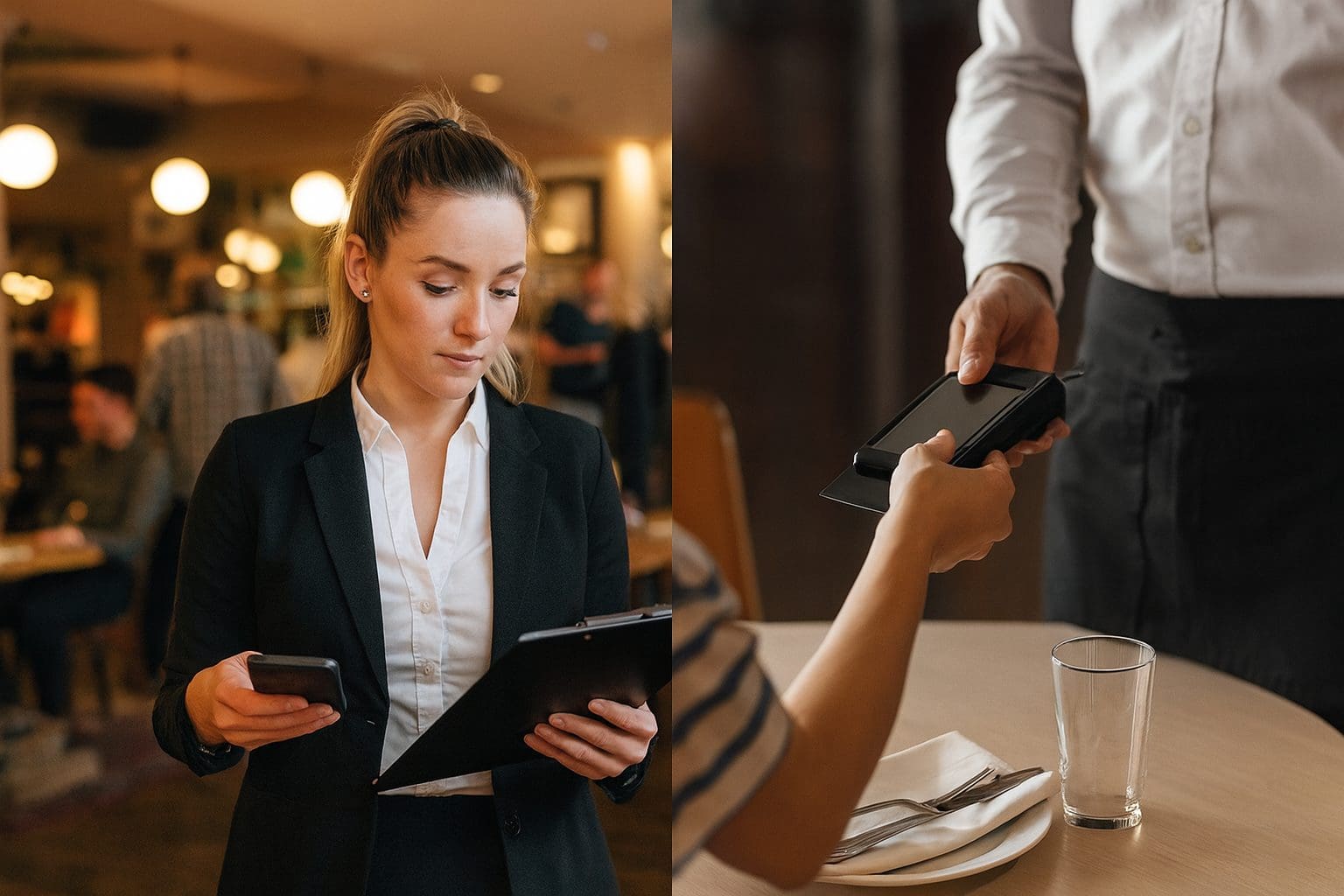
When a guest is ready to go, they should be able to pay quickly. If they can’t pay, they can’t leave. And if they can’t leave, your valuable real estate sits idle, which means your restaurant isn’t making money. Handheld terminals can be an incredibly efficient way to handle bill payments. These devices allow servers to bring the terminal directly to the customer so they can pay and leave without delay. No need for multiple trips back to the POS system.
This technology can streamline the process, reducing the time it takes for customers to settle their bill and allowing you to turn tables faster. What’s more, it reduces the burden on servers, who no longer need to run to the register to close out a check.
__________________________________________________________________________________
9. Maximizing Table Turns Over Trying to Increase Check Average
It’s sometimes more profitable to turn a table for a new dining experience than to continue pushing to increase a table’s check average. For example, keeping a party of four seated for another 20 minutes because you encouraged them to split one dessert might not be the best strategy. Letting them pay and leave, then bringing in another table of entreé-buying, cocktail-drinking customers could be the more profitable move. Table turnover efficiency often outweighs squeezing a little more out of the current guests.
__________________________________________________________________________________
Conclusion: The Key to Maximizing Efficiency
Restaurant efficiency is a multi-faceted challenge, and many of the bottlenecks occur outside the kitchen. By focusing on the front door, timely table resets, fast drink service, and streamlined ordering processes, you can keep your restaurant running smoothly and ensure you’re capitalizing on your peak business windows. Every minute counts in the restaurant business, and small adjustments in these overlooked areas can lead to dramatic improvements in throughput, customer satisfaction, and profitability.
__________________________________________________________________________________
At Blue Orbit, we specialize in optimizing restaurant operations, both in the kitchen and beyond, to help you achieve the efficiency your restaurant needs to thrive. Let’s work together to streamline your operations and maximize your success.