
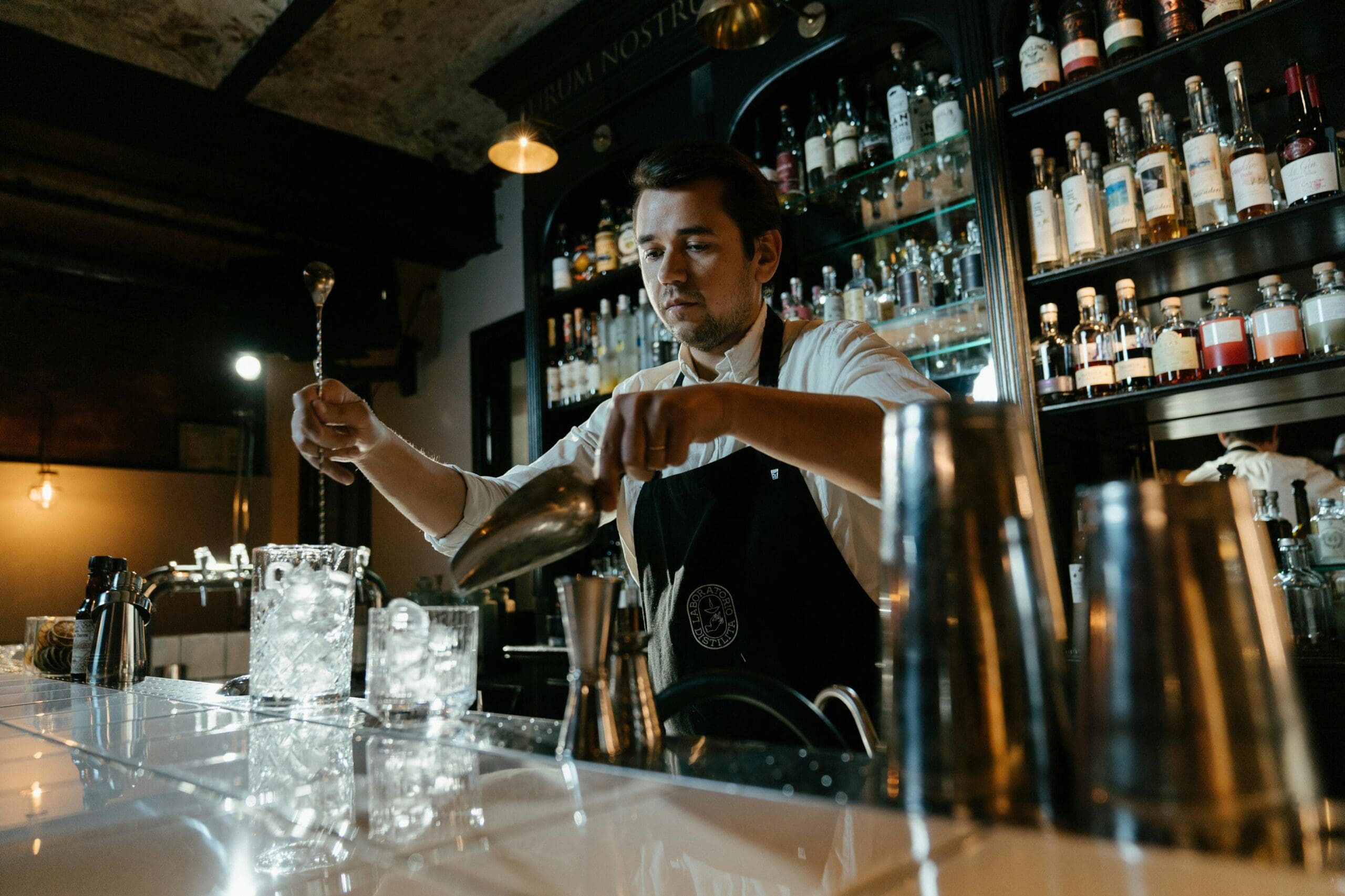
Your Bar Is Underperforming. Here’s the Fix
By Ray Camillo /
Restaurant bar profitability is one of the most undermanaged opportunities in the industry. The math is generous. A cocktail that costs two to three dollars to make can sell for twelve to sixteen dollars. That is an 80 percent margin or better on paper. But for a surprising number of operators, the bar is not delivering anywhere close to that. The reason is almost always the same: no one is actually managing it.
If your bar feels like it should be doing more for your bottom line, it probably should be. Here is where to start.
Know Your Pour Cost Before You Fix Anything Else
Pour cost is the single most useful metric for diagnosing restaurant bar profitability. It is calculated simply: divide the cost of what you poured by the revenue you collected. A well-run bar typically targets a pour cost between 18 and 22 percent on a blended basis.
But that target is not the same for every concept. A high-volume draft beer program will look different from a craft cocktail lounge. A recent industry analysis from Backbar notes that a ‘good’ pour cost is generally within 1.5 percent of your bar’s theoretical pour cost, and that craft-focused programs often land between 20 and 26 percent while still generating strong cash margins.
The key word there is ‘theoretical.’ If you do not know what your pour cost should be based on your actual recipes and sales mix, you cannot know whether what you are experiencing is a problem or just a reflection of your concept. Calculating the theoretical pour cost is the starting line, not an optional exercise.
Cocktail Engineering: Stop Guessing, Start Designing
Most bar menus are built around what the owner likes or what the bartenders know how to make. That is understandable, but it is not a strategy.
Cocktail engineering applies the same logic as food menu engineering: identify what is popular and profitable, what is popular but not profitable, what is profitable but not selling, and what is neither. The menu you should be running looks very different from the menu most bars are running.
Signature cocktails made with lower-cost base spirits but presented with care often generate better margins than top-shelf pours. Nova’s bar menu engineering research found that drinks labeled ‘Most Popular’ or ‘Bartender’s Pick’ sell up to 20 percent more. That is not manipulation. It is just giving guests a comfortable choice.
Where items appear on a physical menu also matters. On a printed menu, the top-right area gets the most attention. Feature your highest-margin items there. On a digital menu or tablet, front and center works the same way.
Speed of Service Is a Profitability Issue
This one catches operators off guard. If your bar takes four minutes to produce a cocktail during a rush, you are limiting how many drinks your guests can order and your servers can deliver. Throughput is revenue.
Batched cocktails are one of the most effective tools for solving this. Batch your most popular cocktails in advance, refrigerate them properly, and your bartenders can pour a consistent, quality drink in seconds instead of minutes. Labor cost drops. Guest experience improves. Margins go up.
The key is building batching into your prep system and holding your team accountable to it. A batched cocktail sitting in a labeled container in the walk-in is not a shortcut. It is just smart kitchen discipline applied to the bar.
Shrinkage Is Costing You More Than You Know
Restaurant bar profitability breaks down in one of three ways: overpouring, waste, or theft. All three are forms of shrinkage. All three are largely preventable.
The fix starts with jiggers. Free-pouring feels natural and fast, but even a quarter-ounce overpour per drink across 100 covers a night adds up to significant money by the end of the month. Standardized pours, enforced consistently, are one of the highest-return habits a bar program can build.
Beyond jiggers, regular variance tracking is essential. Barmetrix describes variance as the difference between what you should have sold and what your POS says you actually sold. When that number is consistently off, you have a problem. The fix might be training, portion tools, or something more uncomfortable. You cannot address what you are not measuring.
The Bar as a Profit Center, Not an Afterthought
The restaurants that get this right treat the bar the same way they treat the kitchen: as a system that needs to be designed, managed, and held accountable to clear standards.
That means costed recipes for every drink on the menu. It means a prep system that includes batching and mise en place for the bar just like the kitchen. It means a weekly pour cost review, not a quarterly one. And it means a cocktail menu that was built to sell, not just to impress on opening night.
If your bar layout and equipment design is also part of the problem, that is worth addressing too. A bar built for speed and efficiency looks different from one designed just to look impressive. They produce very different results.
The beverage program work we do on the menu side starts with costing and engineering before anything goes on the menu. That sequence matters.
If your bar is already busy but the margins are not where they should be, that is a fixable problem. Book an introductory call or schedule an advisory session with our team to talk through where the numbers are breaking down.