
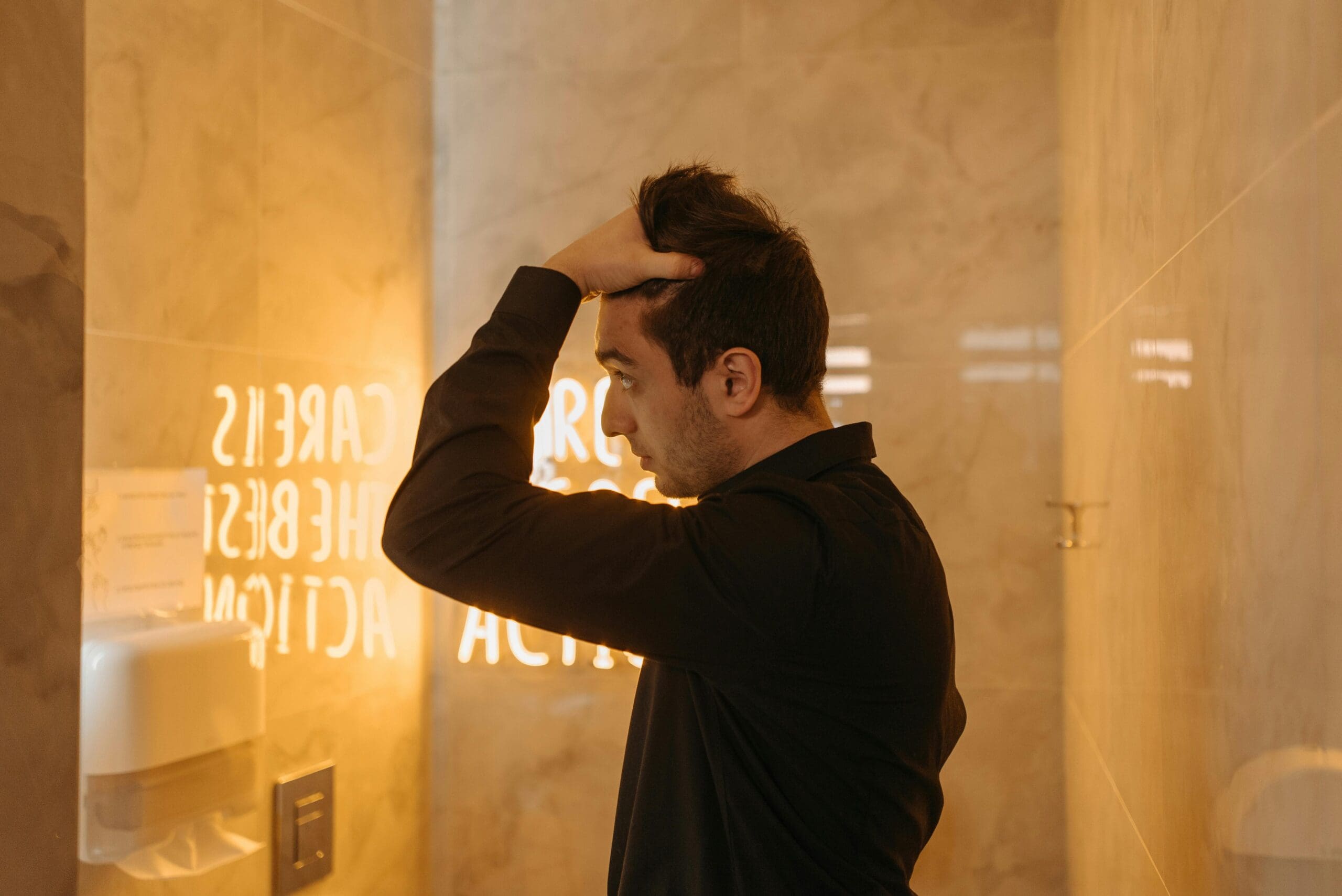
I Went to the Restroom. So Did Half the Wait Staff.
By Ray Camillo /
A solid employee restroom policy might be the most underrated line item in any restaurant build-out. I know that sounds like a strange place to start, but stay with me for a minute.
Last week I had a birthday dinner at a restaurant that earned every bit of its reputation. The room was handsome. The service was composed and attentive. The kitchen was open, and the cooks moved with purpose, confidence, and care. The cocktails were original. The food was exactly what the menu promised.
And then I used the restroom.
A Stall, Three Servers, and a Cloud of Something Awful
The men’s room looked the part. Good lighting. Copper sinks. Heavy floor-to-ceiling stall doors that felt architectural, not afterthought. No paper towels on the floor. No overflowing trash. Clean.
That impression lasted about four seconds.
Both stalls in the urinal-less men’s room were occupied, so I had to wait a minute or two. I heard the lock click open at one of the stalls and prepared to move in. The occupant was a serer. The smell that came with him was impressive in the worst way. He took his time at the sink, washing his hands with the slow deliberateness of someone who has discovered that extended hand-washing constitutes an unofficial break. He didn’t acknowledge me. Not a nod, not a glance. He kept his head down, like he’d forgotten he was standing in a guest space.
I used the stall and made it in and out in under a minute (as long as I could hold my breath, then switch to breathing into my shirt). The server was still there…grooming, primping. As I stepped up to the sink, he moved for the door…but then the second stall opened. Another server. Another aromatic cloud (different dining habits). Same blank expression. Same unhurried exit.
About 45 minutes later, after two glasses of sparkling water and another cocktail, I had to make another quick pitstop. A server was coming out of a stall again as I walked in. Another visit to the throne to chill on the phone (I presume) and exorcise another bad meal decision (fact).
Two visits. Three servers. Three memorable moments I was not trying to have.
What the Restroom Actually Costs You
The problem isn’t that employees have to use the restroom. Obviously. The problem is what happens when the guest restroom becomes an unofficial refuge from the floor.
A stall with a locking door is one of the few places in a restaurant where an employee can disappear without explanation. No manager, no table, no urgency. For a staff member who’s already running on empty, that’s a powerful incentive to linger. The result is that guests encounter employees in a context that strips away every bit of the service culture the operator worked hard to build.
The sensory damage is real, too. I left that restaurant thinking about the stench more than the food. That’s not a small thing. It takes years to build a reputation for transcendent dining. It takes one bad restroom visit to undercut it.
The Case for a Dedicated Employee Restroom
I’ve been in enough restaurant planning sessions to know that employee restrooms get cut early. Square footage is expensive. The argument usually sounds like: “We’ll keep it clean. It won’t be a problem.” And then it becomes a problem.
Last week, actually, I was in Indiana with a new client. We were roughing out the layout for a new concept and the topic came up. One of the team said, “I don’t like employee bathrooms. They’re usually disgusting.” And yes, a poorly managed employee restroom is its own failure. But a well-run one solves several problems at once.
First, it removes the temptation to treat the guest restroom as a break room. When employees have their own space, the informal incentive to hide in the guest stall disappears. Second, it eliminates the hygiene risk of employees cycling through the same restroom as guests, particularly for kitchen staff. I’ve seen cooks walk into a guest restroom with gloves on and walk out with the same gloves on. That image doesn’t leave a guest’s memory quickly.
Third, and maybe most importantly, a dedicated employee restroom is a management statement. It says: we have standards for different spaces, and we hold them. It also creates another opportunity to convey company standards and a culture of accountability. Teams that understand why the guest restroom is off-limits usually understand, at some level, why the guest experience is the whole point.
If You’re Going to Share the Space, Own the Standard
Not every operation can build a separate employee restroom. The square footage isn’t always there. If that’s the situation, the policy has to carry the weight the space can’t.
Assign restroom checks to a specific role, ideally a busser or support staff, and compensate accordingly. Make the check frequent enough to matter, not once a night at closing. Establish a clear expectation that employees using the guest restroom treat it exactly as a guest would encounter it. That’s a trainable standard, but only if someone is actually training it.
The restroom is part of the experience. It’s not a back-of-house afterthought that happens to be accessible from the dining room. Guests judge it, remember it, and sometimes write about it. Treating it accordingly isn’t optional in a serious operation.
If any of this sounds like a conversation worth having before your next build-out or operations review, book an introductory call or schedule an advisory session.