
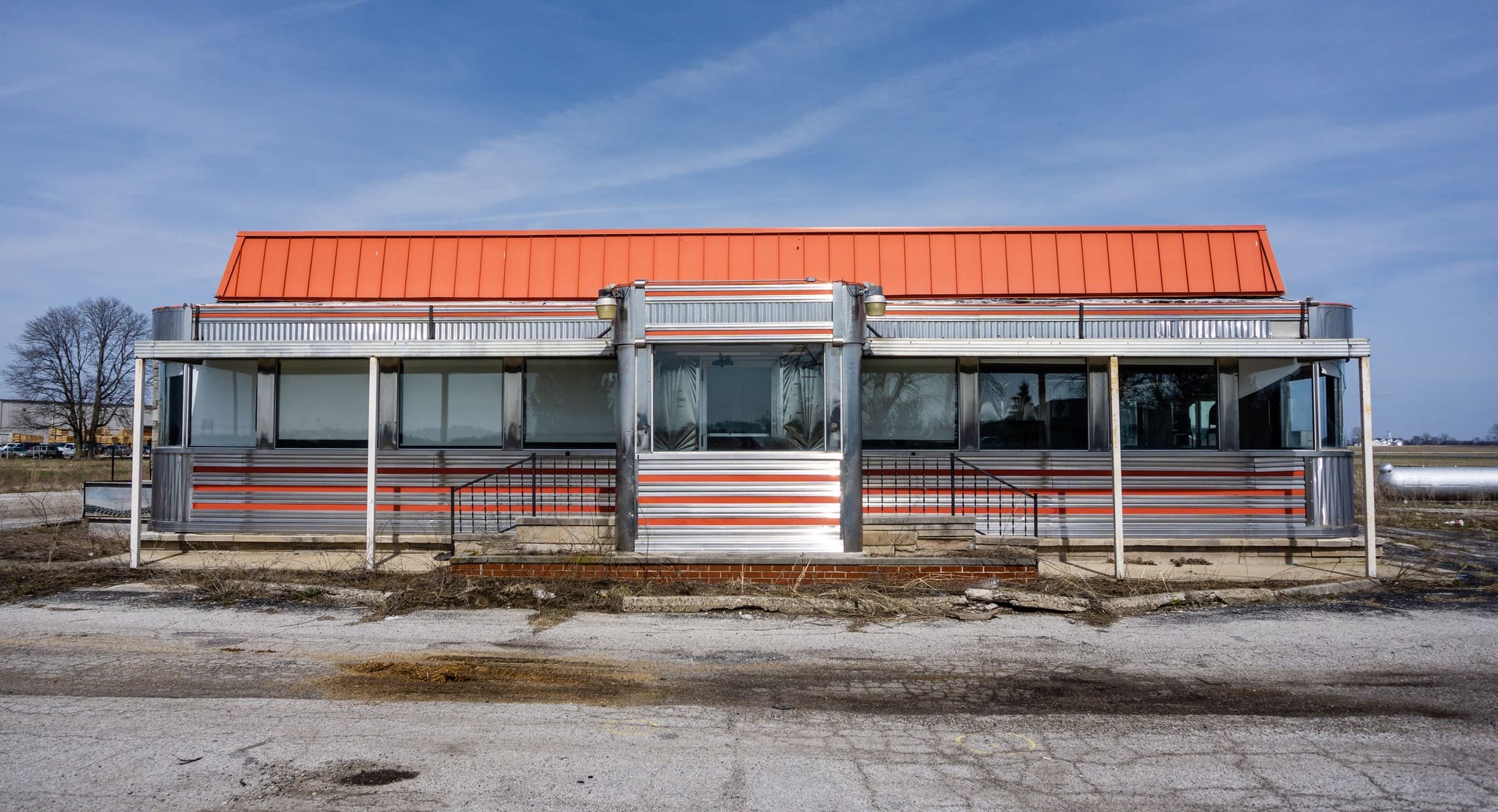
Why That Old Chain Restaurant Location Is Still Available
By Ray Camillo /
Certain chain restaurants have designed their identities so completely into their buildings that the structures outlive the brands by decades. We call this ghost branding, and it follows a failed chain location long after the sign comes down. You know the buildings. The rooflines. The footprint. The weird little cupola or the drive-thru window that sits at an angle only one company ever used. I can spot a former Pizza Hut, a Hardee’s, or a Taco Bell at 45 miles per hour. Most people can.
That is the problem.
The Memory Sticks Longer Than the Paint
When an independent operator takes over one of these spaces, they are not starting fresh. They are starting with 30 years of someone else’s brand soaked into the building, and in most cases, the previous brand failed. Customers approach that corner with a memory already filed: “that old Pizza Hut.” Worse, the association that comes with it is one of closure, of a concept that did not make it.
Overcoming that requires customers to fully disassociate the new business from its previous life (which, by the way, carries the stigma of a prior failure), or a massive and expensive marketing effort enough to replace a decade of brand association in people’s minds. Most independent operators have the budget for neither.
The result is a restaurant that garners little attention (other than eye rolls, and maybe even pity), struggles to build regulars, and closes within two years. Then the next operator finds the same deal on the lease and tries the same thing.
Why the Deal Looks Better Than It Is
The second-generation space calculation goes like this: existing hood, grease trap, electrical panel, plumbing. Subtract those savings from your total project budget and pocket the difference. Nation’s Restaurant News notes that converting a second-generation space can save franchisees substantial time and money over new construction Nation’s Restaurant News, and that is genuinely true for most second-gen spaces. Chain shells are different.
Sure, they save a bunch of money on the front end. But at what cost?
The real budget should also account for exterior work significant enough to break the memory of the facade, signage designed to fight the building’s own silhouette, and a longer ramp-up period because foot traffic will be slower to trust a new concept in a space that carries a failure on its record. These are not hypothetical costs. They show up in project after project, usually about six months after opening when the numbers are not moving.
The Ones That Work
The conversions that succeed almost always share one thing: the operator knew exactly what they were buying. They did not try to cosmetically re-skin a former Backyard Burger. They budgeted for transformation, not renovation. New facade. Significant exterior changes. Sometimes a near-complete rebuild of everything a driver can see from the road. They treated the building’s memory as a real line item, not an afterthought.
The ones that fail usually found the space because it was available and the price was right. That availability is information. If a high-visibility corner with an existing kitchen and decent parking has been sitting empty, or cycling through short-lived concepts, someone should ask why before signing anything.
Sometimes the answer is the landlord. Sometimes it is the trade area. Often, it is the building itself, still wearing the memory of what it used to be, waiting for someone to spend enough money to make people forget.
Former bank buildings turned restaurants are a different story, and worth their own conversation.